When you put AWS WAF and TLS termination on CloudFront, you get protection and performance at the edge. But there’s a common gap: users can still call your ALB (origin) directly and bypass those edge controls unless you explicitly block “origin bypass”.
This post shows one simple pattern to secure an Application Load Balancer (ALB) behind CloudFront so the ALB only serves requests that came through CloudFront.
Reference architecture
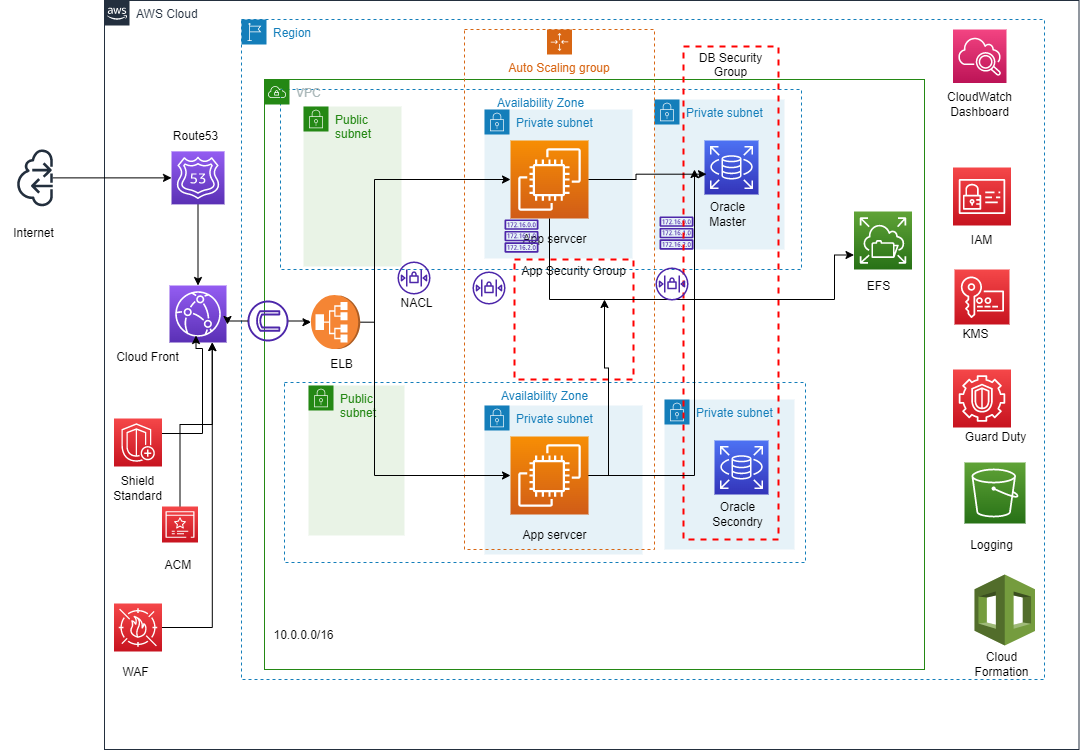
I was building a secure, scalable, and highly available web app using this AWS setup:
- Database: Amazon RDS (Multi-AZ)
- Compute: Auto Scaling EC2 instances behind an Application Load Balancer (ALB)
- Networking: public subnets for the ALB, private subnets for app servers and the RDS database
I initially planned to use WAF and TLS termination at the ALB. But to improve performance for global users, I decided to place CloudFront in front—then move WAF and TLS termination to CloudFront for:
- Lower ALB load: WAF rules run at edge locations
- Lower TLS overhead: TLS handshakes terminate at the edge
The problem: origin bypass
Even with CloudFront in front, your ALB is still internet-reachable. If someone calls the ALB DNS name directly, they can bypass the WAF/TLS configuration you placed on CloudFront.
The goal is simple: the ALB should only accept requests forwarded by CloudFront.
I considered monitoring CloudFront IP ranges and updating the ALB security group, but that felt operationally complex.
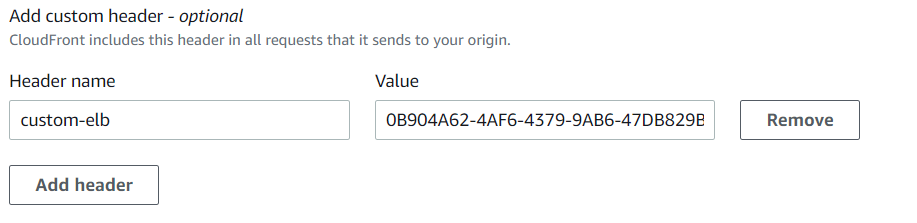
Instead, here’s a pragmatic approach: have CloudFront add a secret custom header, and configure the ALB listener to only forward requests that contain that header.
Solution: CloudFront custom header + ALB listener rule
1) Create a custom header in CloudFront
In your CloudFront origin request settings, add a custom header with a hard-to-guess value (treat it like a secret).
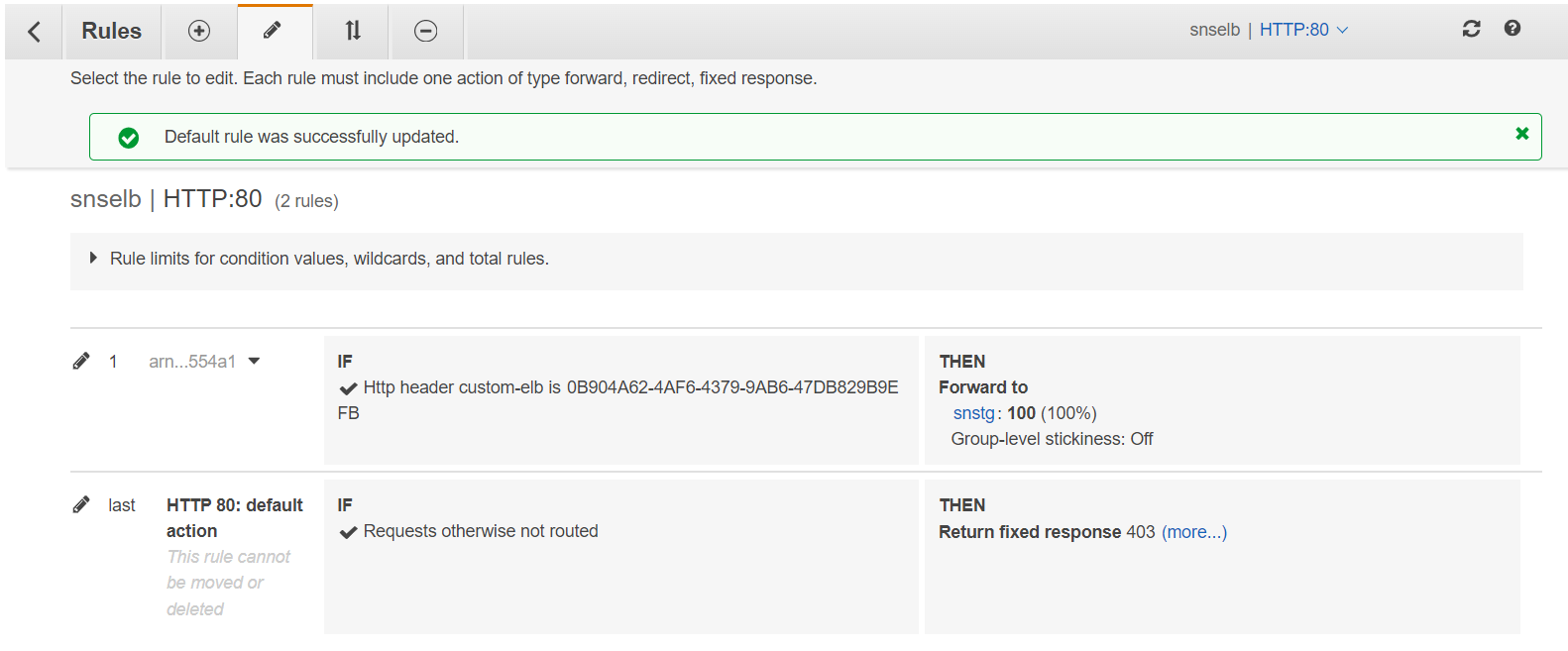
2) Add an ALB listener rule to validate the header
- Create a new ALB listener rule that checks for the custom header and forwards 100% traffic to your target group.
- Update the default / existing rule (without the header) to return an error like 403 Forbidden.
3) Validate
- Request via CloudFront → should return your expected app response
- Request the ALB directly → should return 403 (or your configured error response)
Hardening notes (recommended)
- Rotate the secret header value periodically (and whenever you suspect leakage).
- Keep WAF at CloudFront for edge protection, but consider also having basic protections at the ALB if your risk warrants it.
- If feasible in your environment, prefer network-based restriction too (e.g., limiting inbound origin access to CloudFront origin-facing IP ranges / managed prefix lists), and use the header check as defense-in-depth.
FAQ
Is a custom header enough to stop origin bypass?
It’s a strong and widely used control. For higher assurance, combine it with network restrictions (security group rules) and monitoring/alerting on direct ALB hits.
What error code should the ALB return for direct requests?
Common choices are 403 (forbidden) or 404 (not found). 403 is clearer for operators; 404 can reduce signal to attackers.
Can I automate this with Terraform or CloudFormation?
Yes—CloudFront origin custom headers and ALB listener rules are both automatable. (I’ll add an infra-as-code version in a follow-up.)
Comments
Have a question or a different perspective? Add a comment below.